
Documentation Domain
Your Smart Home Has a Story, Make Sure It's Written Down.
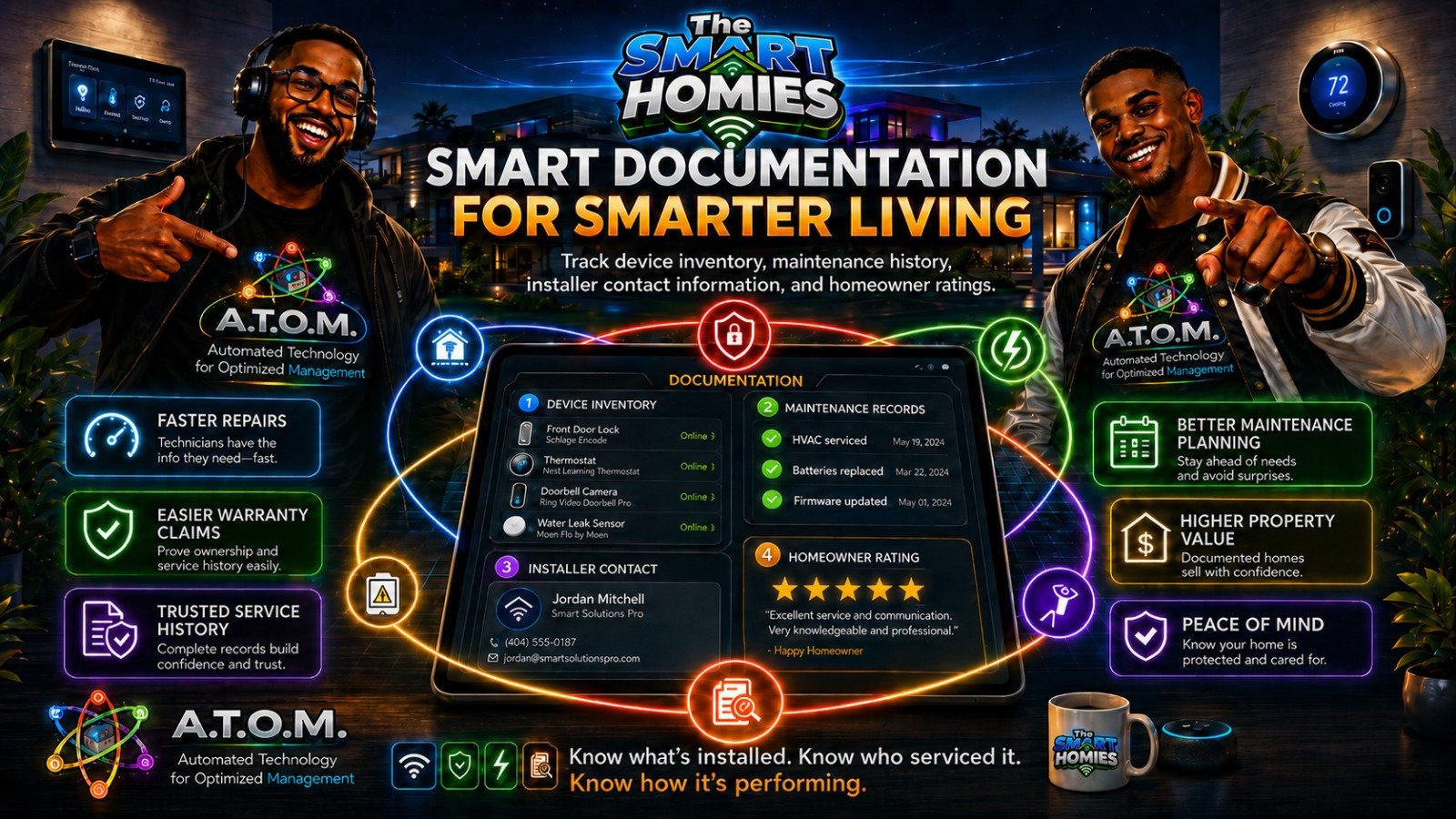
Most homeowners never think twice about keeping records for their smart home, and that is exactly where things start to go wrong. The Documentation Domain is the practice of recording everything that makes your smart home work: every device installed, every cable run, and every change made along the way. Think of it like the owner's manual for your entire home. When something stops working, good documentation tells you exactly what was installed, who installed it, where it lives inside your walls or network, and when it was last serviced, turning what could be a days-long headache into a quick, straightforward fix. Without it, troubleshooting becomes guesswork, upgrades become risky, and the next technician who walks through your door has to start from scratch every single time.
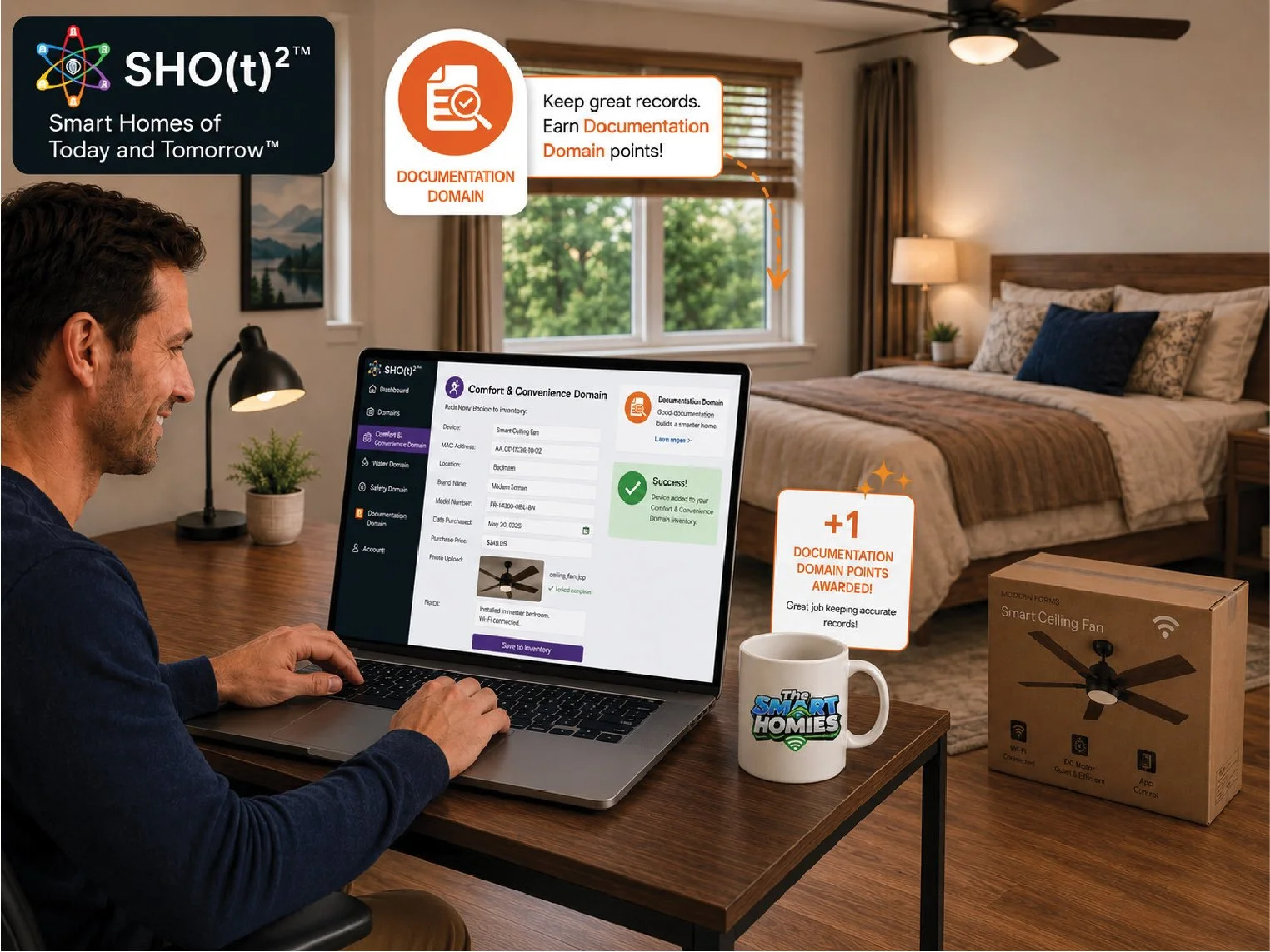
Keeping a proper inventory of every smart device in your home, along with records of who performed each installation, where each component is located, and why certain decisions were made, protects you in ways most homeowners don't anticipate until it's too late. It is important to note that the Documentation Domain does not cover how each device is configured, because those settings are personal and unique to every homeowner's lifestyle and preferences. What it does cover is a thorough device inventory pulled from every domain in your smart home: Networks, Energy, Safety, Security, and beyond, so that every piece of hardware is accounted for, traceable, and easy to reference. If a device fails under warranty, documentation proves when and by whom it was installed. If you sell your home, thorough records become a genuine selling point that demonstrates the care and quality behind every system. If a family member or caregiver needs to manage the home in an emergency, clear records mean they don't have to figure everything out under pressure.
Within the A.T.O.M. Framework — Automated Technology for Optimized Management — the Documentation Domain holds the second most critical position, ranked just behind the Energy Domain. The reason is simple: without accurate records, every other domain becomes harder to manage, maintain, and improve. The Smart Homies treat documentation as a living, breathing part of every smart home project because they understand that a system no one can explain is a system no one can trust. Whether a homeowner is troubleshooting a device, planning an upgrade, or handing their home off to a new owner, the Documentation Domain ensures that the knowledge behind every smart decision made in that home is never lost.
Benefits of a High Documentation Score
Peace of Mind: Knowing that every device in your smart home is recorded and accounted for means you can troubleshoot, upgrade, or hand off your system with confidence and without confusion.
Faster, Cheaper Repairs: When a device fails, documented installation records and service history help technicians identify and fix the problem quickly, rather than spending billable hours figuring out what was installed and where.
Warranty Protection: Organized records ensure that purchase dates, installer information, and product details are always within reach when a warranty claim needs to be filed before the deadline.
Smarter Home Sales: A fully documented smart home is a stronger selling point, giving buyers confidence in the quality and care of every system and potentially increasing the home's overall value.
Knowledge That Stays With the Home: Thorough documentation ensures that critical information about every device and system is never tied to a single person's memory, keeping the smart home manageable no matter who maintains it.
How it WorksNever lose track of what you own, when it was installed, or when it needs attention.
Join the Smart Homies and walk through every domain of your smart home to ensure that what was installed, who installed it, and why it matters is clearly recorded and never left to memory.
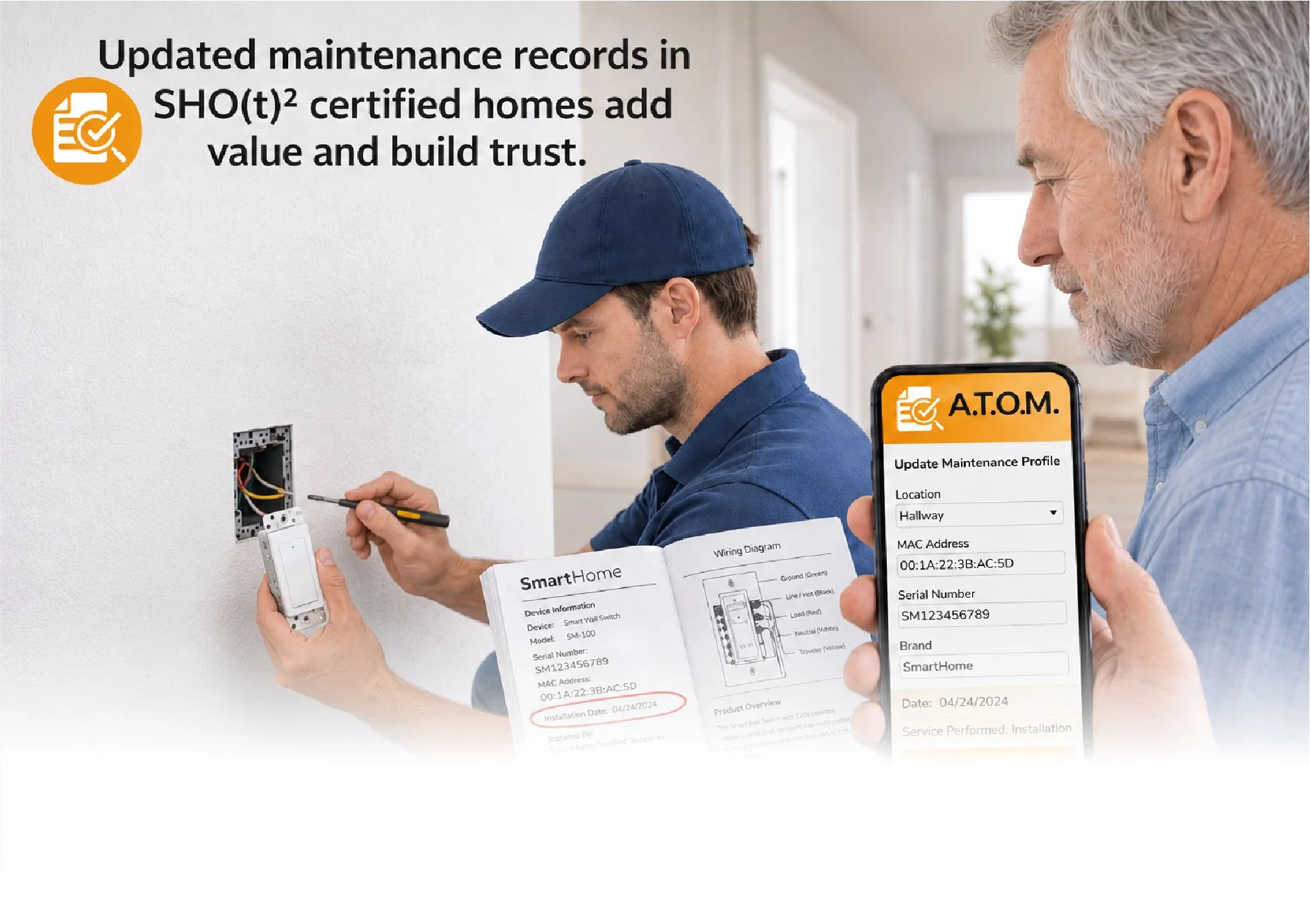
Device Inventory: Confirms that every smart device across all domains, from network equipment and energy monitors to security cameras and smart appliances, is cataloged with its make, model, location, and installation date.
Installation Records: Verifies that documentation exists for who performed each installation, when it was completed, and where each component is located in the home, so nothing is ever a mystery.
Warranty & Service History: Ensures that warranty information, service dates, and maintenance records are organized and accessible, enabling homeowners to act quickly when a device needs repair or replacement.
System Change Log: Tracks any upgrades, replacements, or additions made to the smart home over time so there is always a clear picture of how the home has evolved and why certain changes were made.
Domain Cross-Reference: Confirms that the device inventory is organized by domain: Networks, Energy, Security, and beyond, so any device in the home can be quickly located, identified, and traced back to its purpose within the overall smart home system.
Standards & References
ANSI/TIA-606: The administration standard for telecommunications infrastructure that provides a labeling and record-keeping framework, helping homeowners and technicians identify and trace every cable and network component in the home.
Home Inventory Apps: Platforms like Centriq and HomeZada allow homeowners to catalogue devices, store manuals, track warranties, and log service history all in one organized digital location.
Asset Management Spreadsheets: A simple but effective tool for tracking device make, model, serial number, installation date, location, and installer information across every domain of the smart home.
QR Code Labeling: Attaching QR codes to devices and panels allows anyone — homeowner, technician, or caregiver — to instantly pull up the full record for that device with a quick scan from a smartphone.