
Security Domain

Layers of Protection, Zero Tolerance — Your Home Is Your Castle.

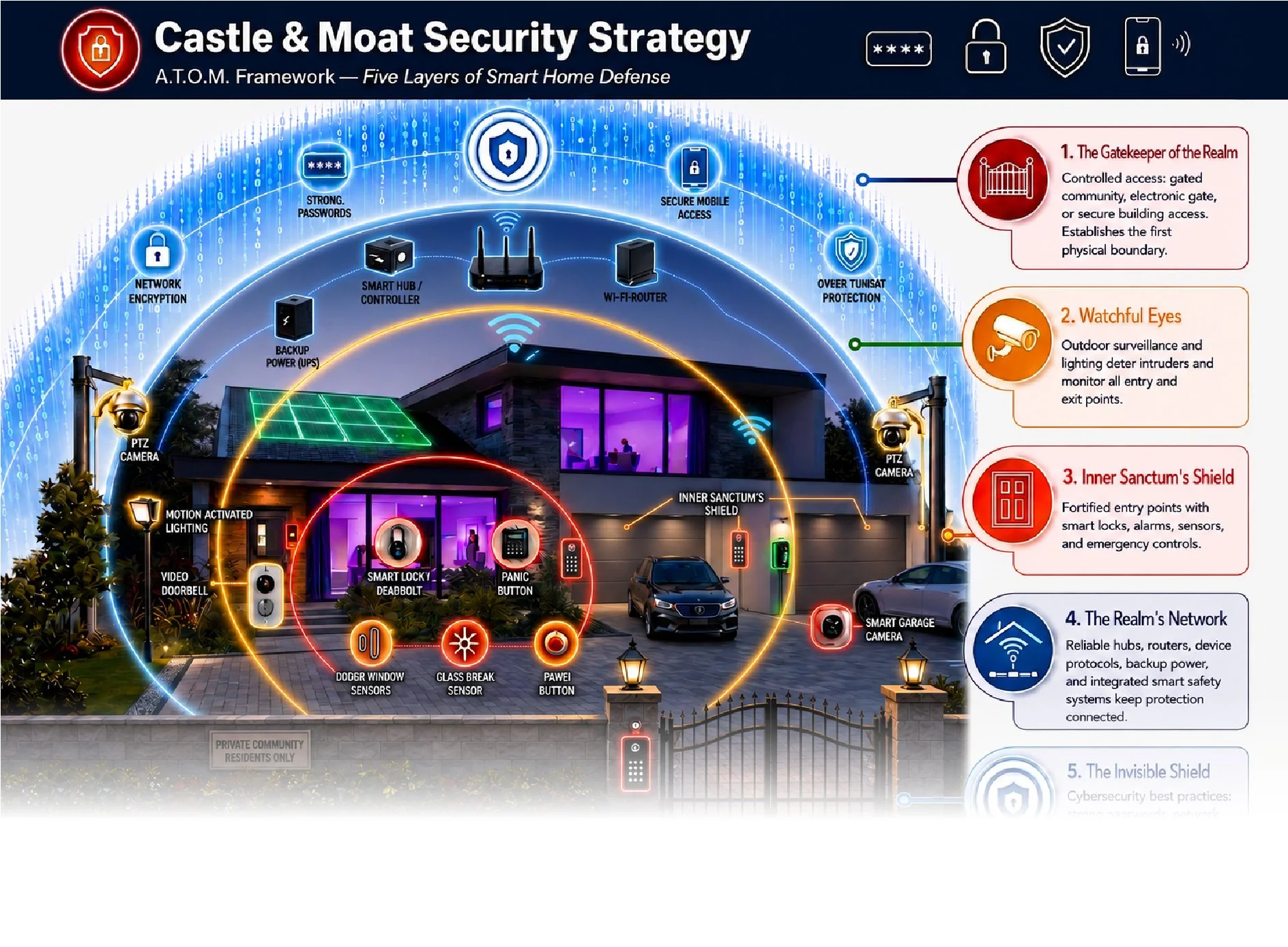
The Smart Homies know that security is not just a checklist; it is a strategy. The Security Domain of the A.T.O.M. Framework evaluates your home through a Castle-and-Moat approach, layering multiple levels of protection inside and out, so your family, property, and personal data are never left relying on just one line of defense. 

🏰 Layer 1 — The Gate Keeper (Controlled Access to the Environment) Your first line of defense starts before anyone reaches your front door — think gated communities, electronic private gates, or secured building access in apartments, townhomes, and condominiums. Like a castle's moat, this layer sets a clear boundary, stopping trouble before it starts.

👁️ Layer 2 — Watchful Eyes (Outdoor Surveillance & Deterrence) This layer ensures nothing goes unnoticed outside your home. Outdoor camera placement, night vision, motion detection, and smart lighting work together to eliminate blind spots and discourage unwanted visitors before they get any closer.

🛡️ Layer 3 — The Inner Sanctum (Entry Point & Interior Fortification) This is where your home pushes back hardest. Smart locks, alarm systems, panic buttons, glass break sensors, biometric access, and secure firearm storage are all evaluated to ensure your interior is ready if the outer layers are ever breached.

🌐 Layer 4 — The Realm's Network (Connectivity & System Integration) Every security component in your home depends on a reliable network. This layer evaluates your routers, hubs, device communication, and backup power to keep everything connected, responsive, and ready — even during an outage.

🔒 Layer 5 — The Invisible Shield (Cybersecurity & Digital Defense) The layer you cannot see may be the most critical. Password strength, network encryption, and mobile device security are all assessed here — because your digital doors need to be just as secure as your physical ones.

How it Works

The Castle-and-Moat approach shifts you from reacting to emergencies after the fact to preventing them altogether — because the best security incident is the one that never happens.


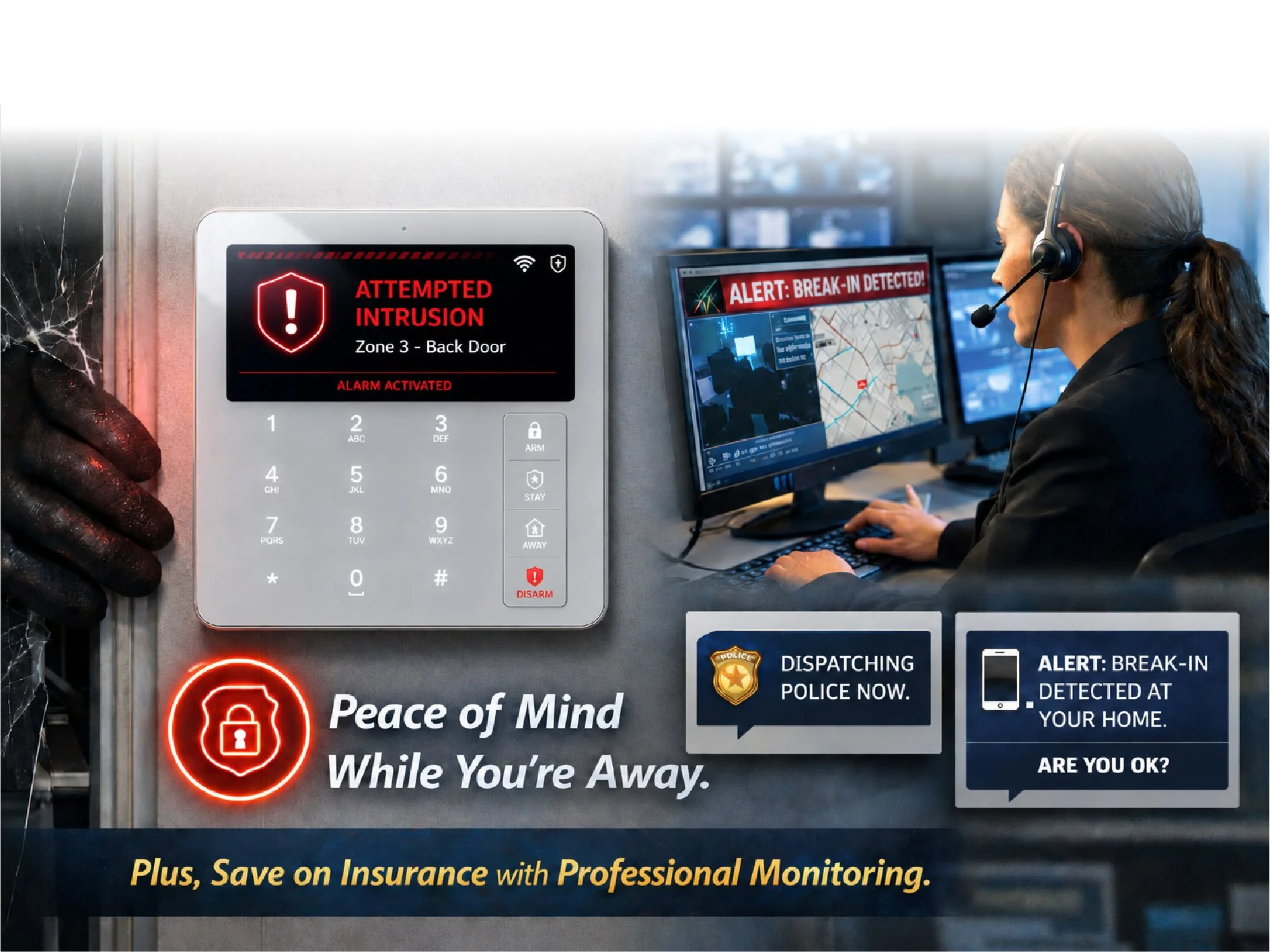
A security system alert panel displays an attempted intrusion at the back door in Zone 3, with alarm activated. Next to it, a security officer watches monitors with an alert about a break-in detected at home, using professional monitoring. The text in the image promotes peace of mind and insurance savings with professional monitoring.

Think of your smart home like your personal sanctuary; you lock your doors, close your windows, and maybe even install a security system to keep your family safe. Your connected devices deserve the same level of care. Every smart gadget in your home, from your doorbell camera to your thermostat, is linked through your home network. That connection is incredibly convenient, but it also means that one weak spot can open the door to the rest. The Security Domain is all about understanding those risks and knowing how to close the gaps before someone else finds them.

The good news is that protecting your smart home does not require a degree in technology. Simple habits go a long way,  like changing the default passwords on new devices, keeping your device apps and firmware updated, and setting up a separate Wi-Fi network just for your smart gadgets. That last tip is like giving your smart devices their own room in the house, and if something goes wrong with one, it stays contained and cannot affect your laptops, phones, or personal files. Pair that with turning on two-step verification for your accounts, and you have already put up a solid defense against the most common threats homeowners face.

Your Smart Homies believe that a smarter home should also be a safer one. The Security Domain is your friendly guide to staying one step ahead without the confusing jargon. Whether you are just setting up your first smart device or looking to tighten up a home full of them, we break everything down in plain language so you can make confident decisions about protecting what matters most: your family, your privacy, and your peace of mind.


Benefits of a High Security Score

  • Peace of Mind:  Know that your home, family, and valuables are protected around the clock by multiple layers of smart security that work together seamlessly.

  • 🚨 Faster Threat Detection:  Smart sensors, cameras, and alerts catch potential problems in real time, giving you the opportunity to respond before a situation escalates.

  • 🔐 Reduced Risk of Break-Ins & Cyber Threats:  Layered physical and digital defenses make your home a significantly harder target for both intruders and online bad actors.

  • 📈 Increased Home Value:  A professionally assessed and well-secured smart home is a more attractive and marketable property in today's informed real estate landscape.

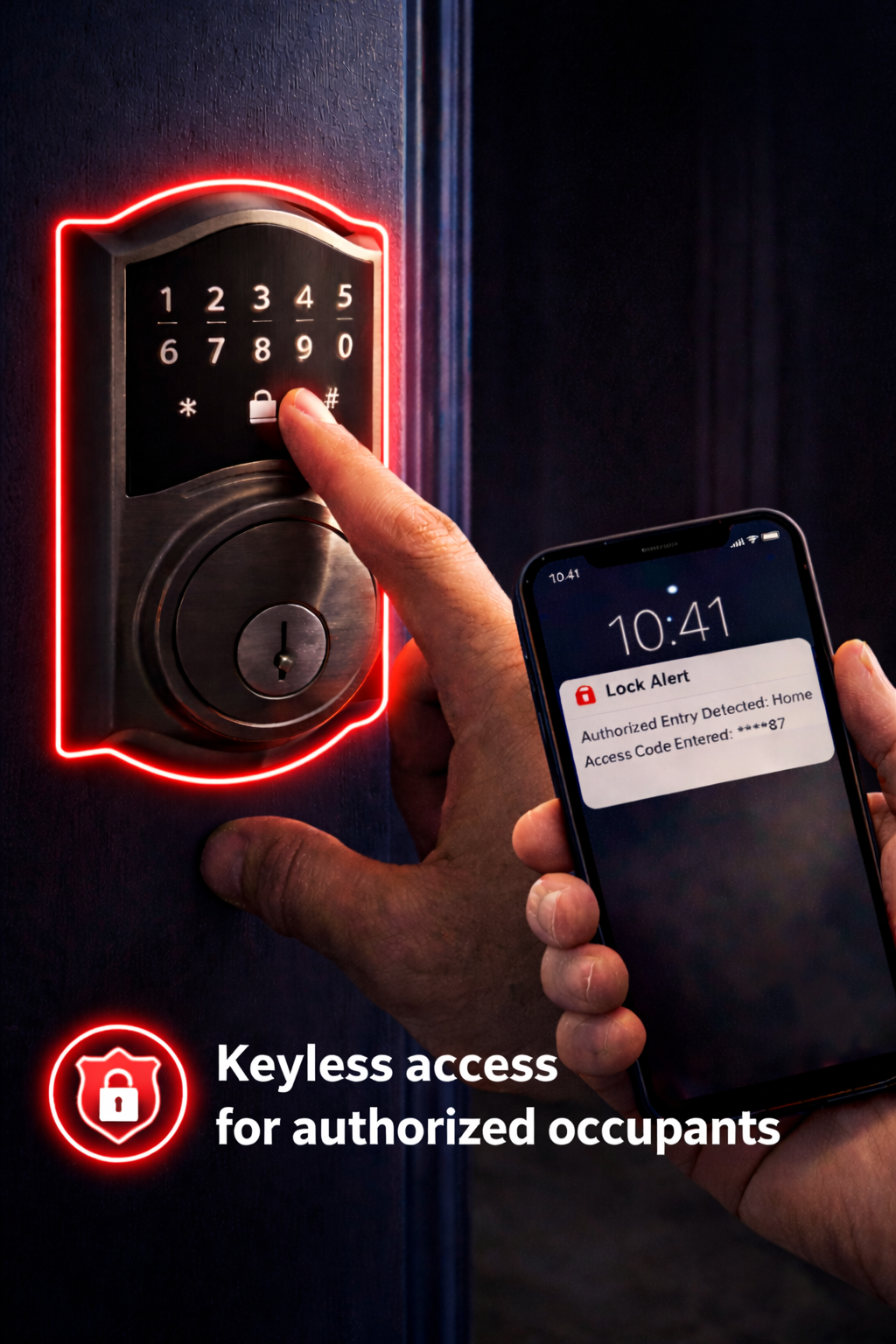
A person uses a smartphone with a lock alert on the screen to unlock a door with a keypad lock, displaying keyless access for authorized occupants.
Smart home security system with cameras around a two-story house. A hand holding a smartphone displays an alert message: 'Packages Delivered.' The house has outdoor lights on, and a person is seen walking near the front door. The text on the image reads: 'Peace of Mind While You're Away.'

Standards & References

  • 🏛️ NIST Cybersecurity Framework (CSF) & SP 800-213 — The gold standard for cybersecurity guidance in the United States. Special Publications 800-213 and 800-213A address emerging threats and new technologies, while NISTIR 8425A provides specific recommendations for securing consumer routers — one of the most commonly targeted devices in the smart home.

  • 🔒 UL 2900 — Cybersecurity Standard for Network-Connectable Products — Developed by Underwriters Laboratories, this standard provides an independently verified baseline for evaluating the cybersecurity posture of smart home and IoT devices, helping homeowners identify products that have been rigorously tested for digital safety.

  • 🚨 UL 1023 — Household Burglar Alarm System Units — This standard covers household burglar alarm systems and requires supervision of initiating device circuits, ensuring that any open circuit or communication failure is indicated to the alarm system user — a critical benchmark for any home intrusion detection setup.

  • 🔑 ANSI/BHMA A156 — Standards for Door Hardware & Locks — ANSI and BHMA ratings reveal everything from the effort it takes to defeat a lock through picking or brute force, to the durability and long-term physical performance of the hardware — making this the go-to standard for evaluating the quality of smart locks and deadbolts on residential entry points