Yellow warning triangle with a black border and an exclamation mark inside.

Safety Domain

Improving health, preventing mishaps, and reducing hazards for people and property

How it Works

Your home should protect you, not put you or your loved ones at risk. Explore the Safety Domain to discover how smart technology identifies and reduces hidden hazards, and take the first step toward a safer, smarter home today.

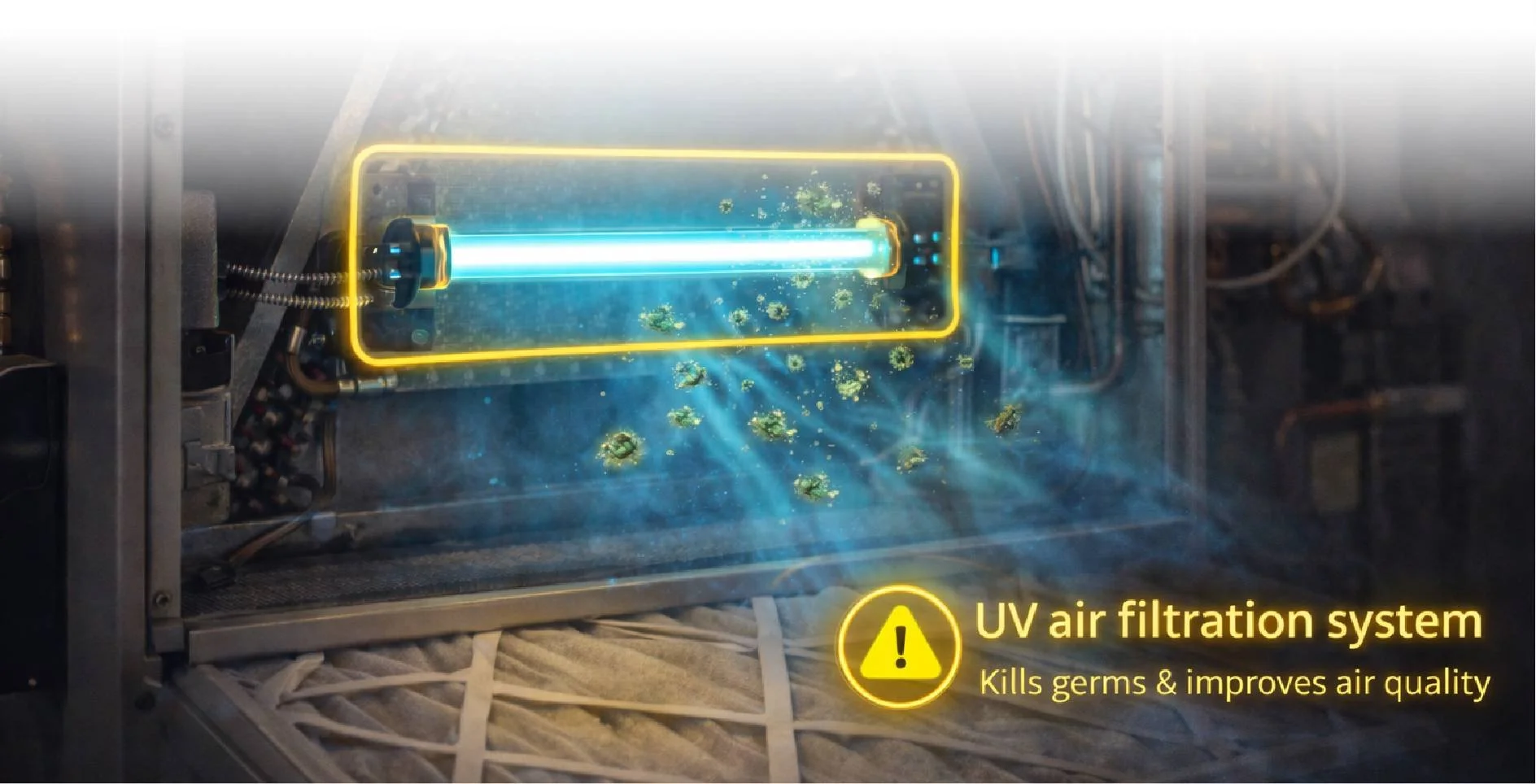
UV air filtration system in a machine emitting blue light and small particles, with a yellow warning sign and text indicating it kills germs and improves air quality.

Your home is your sanctuary — the place where your family eats, sleeps, plays, and grows. But hidden inside even the most comfortable homes are everyday hazards that can go completely unnoticed until it is too late. That is exactly what the Safety Domain is all about. As one of the core pillars of the A.T.O.M. Framework, the Smart Homies' guiding approach to building a truly intelligent and well-protected home, the Safety Domain is built around four key areas: Air, Electricity, Fire, and Water. Together, they represent your smart home's way of keeping watch over the things that matter most, around the clock, even when you are busy, distracted, or fast asleep. Think of it as having an invisible guardian quietly monitoring your home 24/7 and alerting you the moment something does not look right.

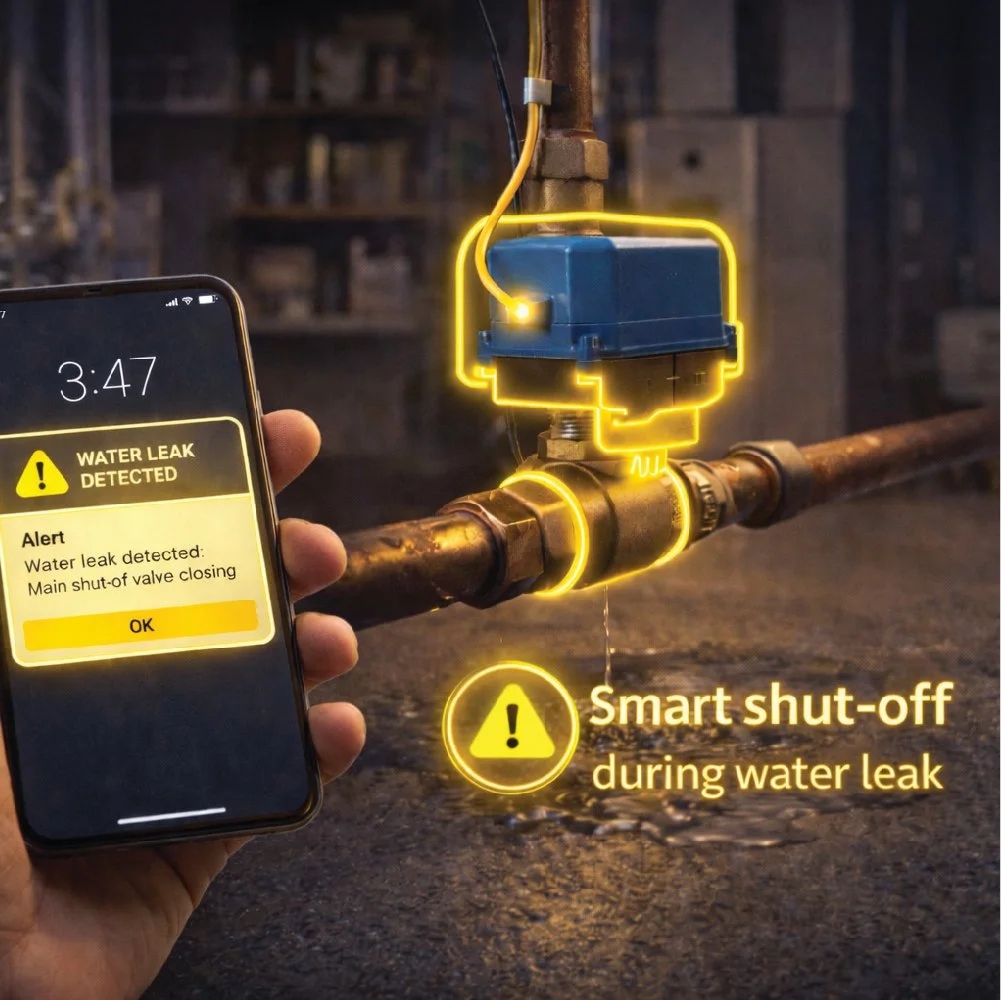
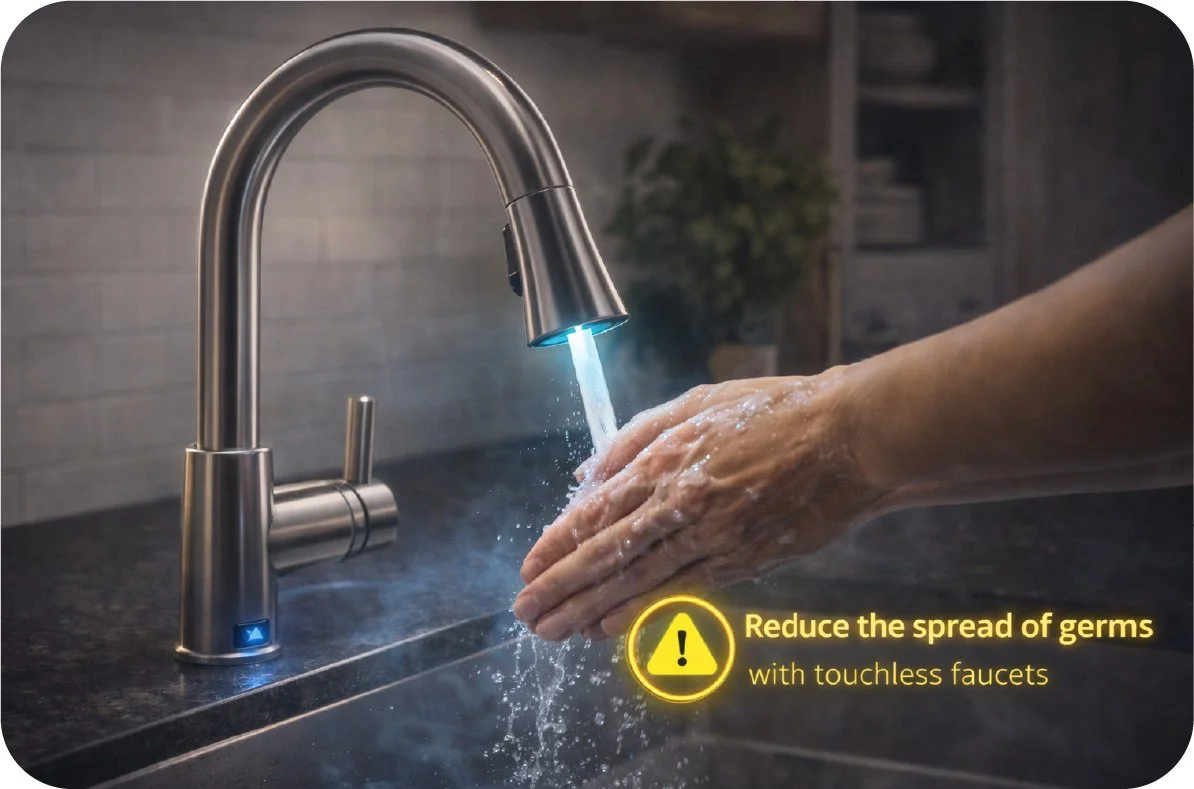
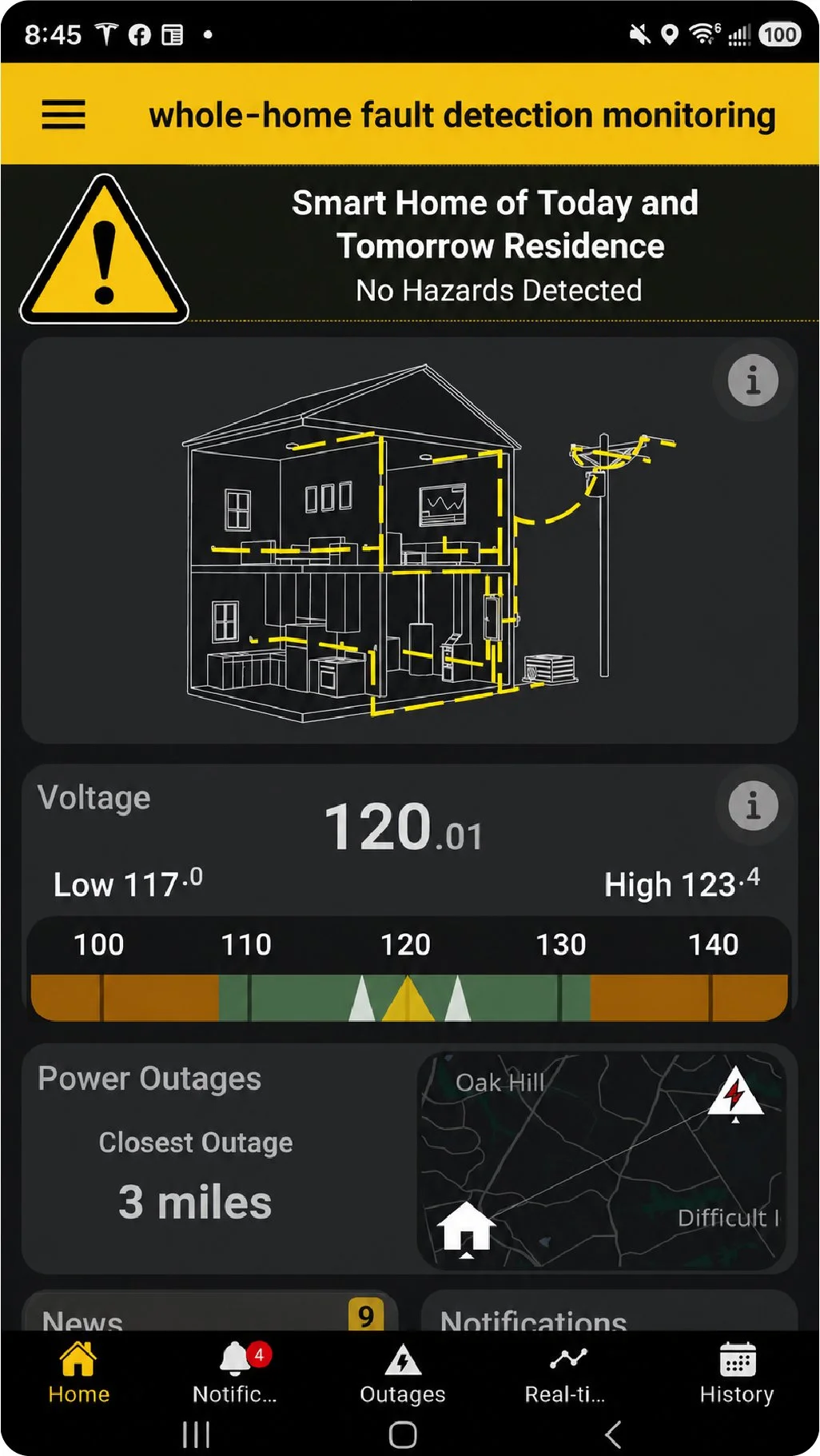
Each of these four areas covers real risks that real families face every day. Stale or contaminated air, including dangerous gases like carbon monoxide that you cannot see or smell, can silently affect your family's health without a single warning sign. Electrical issues hiding inside your walls can spark fires long before any visible damage appears. Speaking of fire, smart detection systems do not just sound an alarm; they can alert your phone, notify neighbors, and even trigger automated responses to help contain a situation faster. And water? It goes far beyond just catching a leak in a pipe. Smart water systems can automatically shut off your water supply before a small drip turns into a flooded basement, monitor your water quality, and even promote better hygiene with hands-free faucets that reduce the spread of germs. There are even smart water softening systems that filter out harsh minerals, which means softer skin, healthier hair, and less irritation for everyone in the household, from the kids to grandma.

What makes the Safety Domain truly powerful and why it sits at the heart of the A.T.O.M. Framework is the shift it creates in how you think about home protection. Most of us are used to reacting by calling the plumber after the flood, replacing the smoke detector after it fails, or visiting the doctor after weeks of mysterious headaches caused by poor air quality. Smart safety technology flips that script entirely, helping you spot and solve problems before they ever become emergencies. The Smart Homies see the Safety Domain not as a luxury add-on but as the foundation on which every smart home is built. When your home is operating within the A.T.O.M. Framework, safety is not an afterthought; it is the starting point. Investing in these technologies is not just about protecting your family today; it is about building a home that is healthier, more resilient, and more valuable for years to come.

Benefits of a High Safety Score

  • Early Threat Detection — Continuously monitors air, electrical, fire, and water systems to identify hazards before they become emergencies.

    Proactive Protection — Shifts homeowners from reactive responses to real-time, automated alerts and shutoff actions.

    Cost Savings — Prevents costly property damage, reducing repair bills and potential insurance claims.

    Health & Wellness — Directly improves occupant health by identifying and reducing indoor hazards such as carbon monoxide, poor air quality, and water contamination. 

    Increased Home Value — Smart safety investments strengthen long-term property resilience and appeal to informed buyers.

The Safety Domain is focused on improving health, preventing mishaps, and reducing hazards for both people and property, and is one of the six critical pillars within the A.T.O.M. Framework. The four foundational elements assessed within this domain are:

  • Air Safety

  • Electrical Safety

  • Fire Safety

  • Water Safety


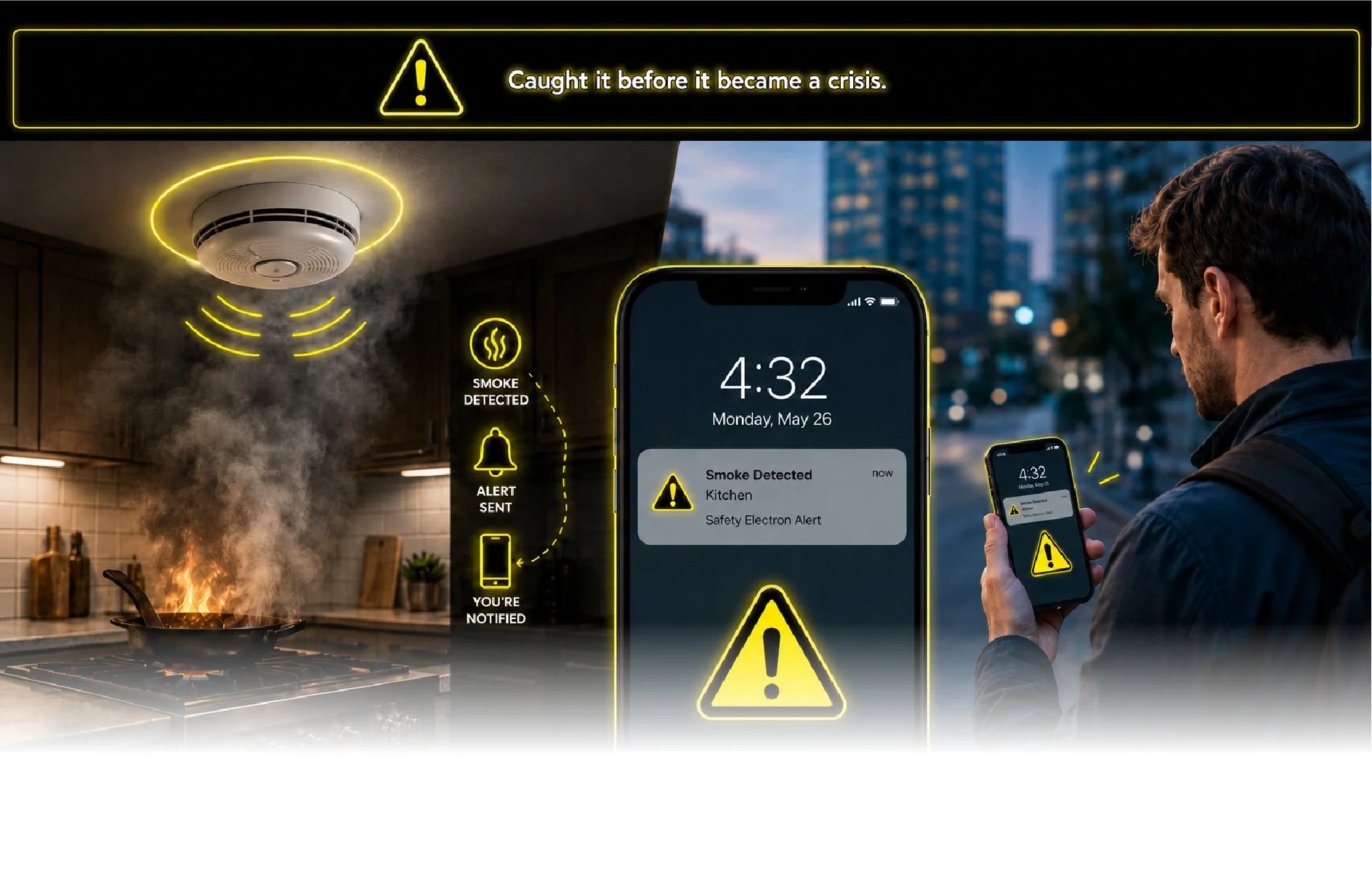
A fire on a stove in a kitchen with a smoke detector above. A man outside at dusk is looking at his phone, which displays a notification about smoke detected in the kitchen. The image includes yellow warning icons and text indicating smoke detection and alert notification.
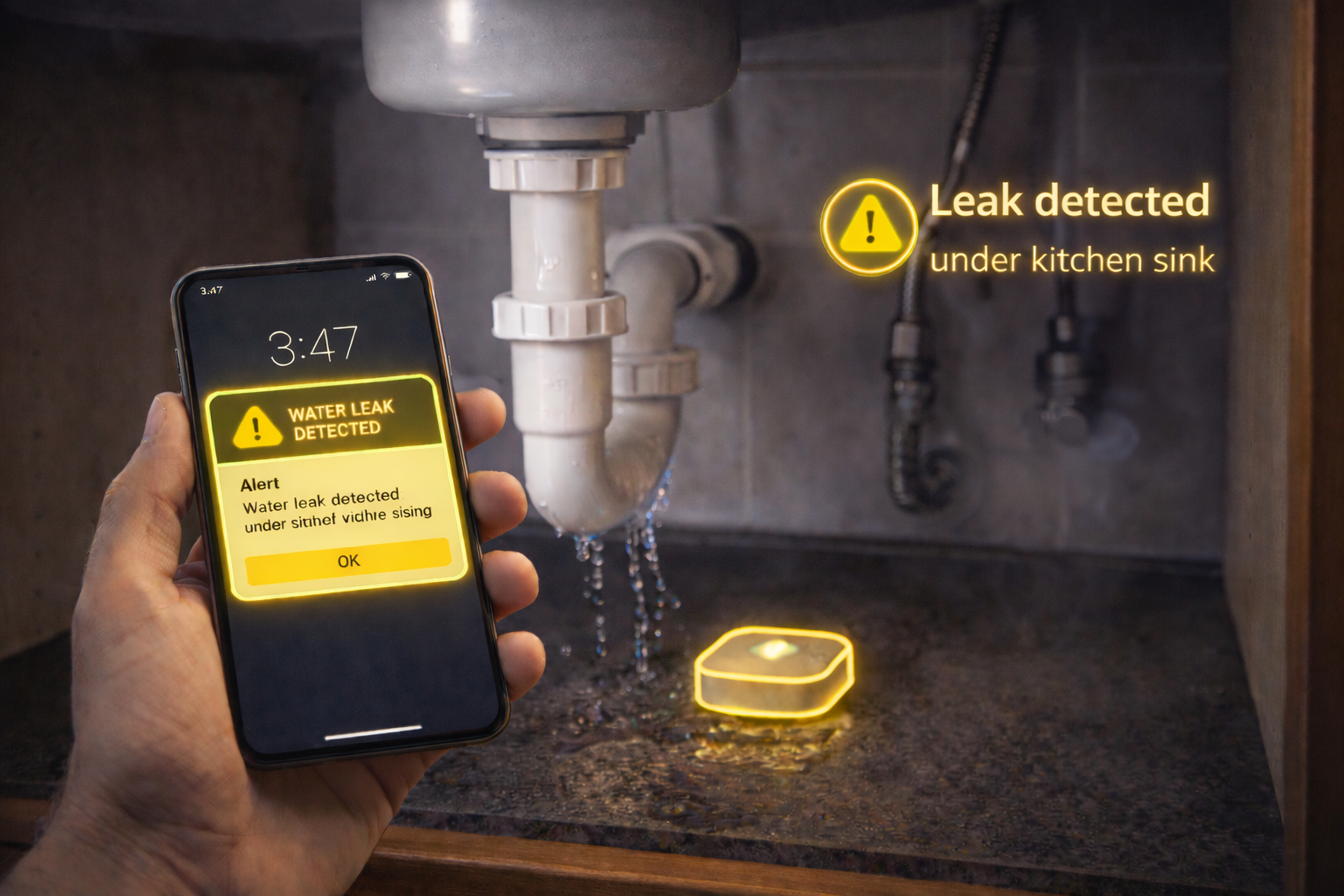
A smartphone displays a notification alert about a water leak detected under a kitchen sink. The sink has water dripping from a pipe beneath it. There is a glowing yellow device on the countertop and a written alert indicating a leak detection under the kitchen sink, with visual indicators and text.

Standards & References

  • NFPA 72 — National Fire Alarm and Signaling Code The foundational standard governing the design, installation, testing, and maintenance of fire alarm and detection systems in residential and commercial buildings, including interconnected smart smoke and heat detectors. 

  • NFPA 101 — Life Safety Code Establishes minimum requirements for building design, construction, and occupancy to protect occupants from the effects of fire, smoke, and other life-threatening emergencies, including egress and emergency lighting. 

  • NFPA 70 — National Electrical Code (NEC) The benchmark standard for safe electrical design and installation in residential structures, covering arc fault circuit interrupters (AFCIs), ground fault circuit interrupters (GFCIs), and smart panel requirements. 

  • EPA — Indoor Air Quality Standards & Radon Guidelines The U.S. Environmental Protection Agency provides guidance on acceptable indoor air quality thresholds, including radon action levels (4 pCi/L), carbon monoxide exposure limits, and VOC monitoring recommendations for residential environments.